
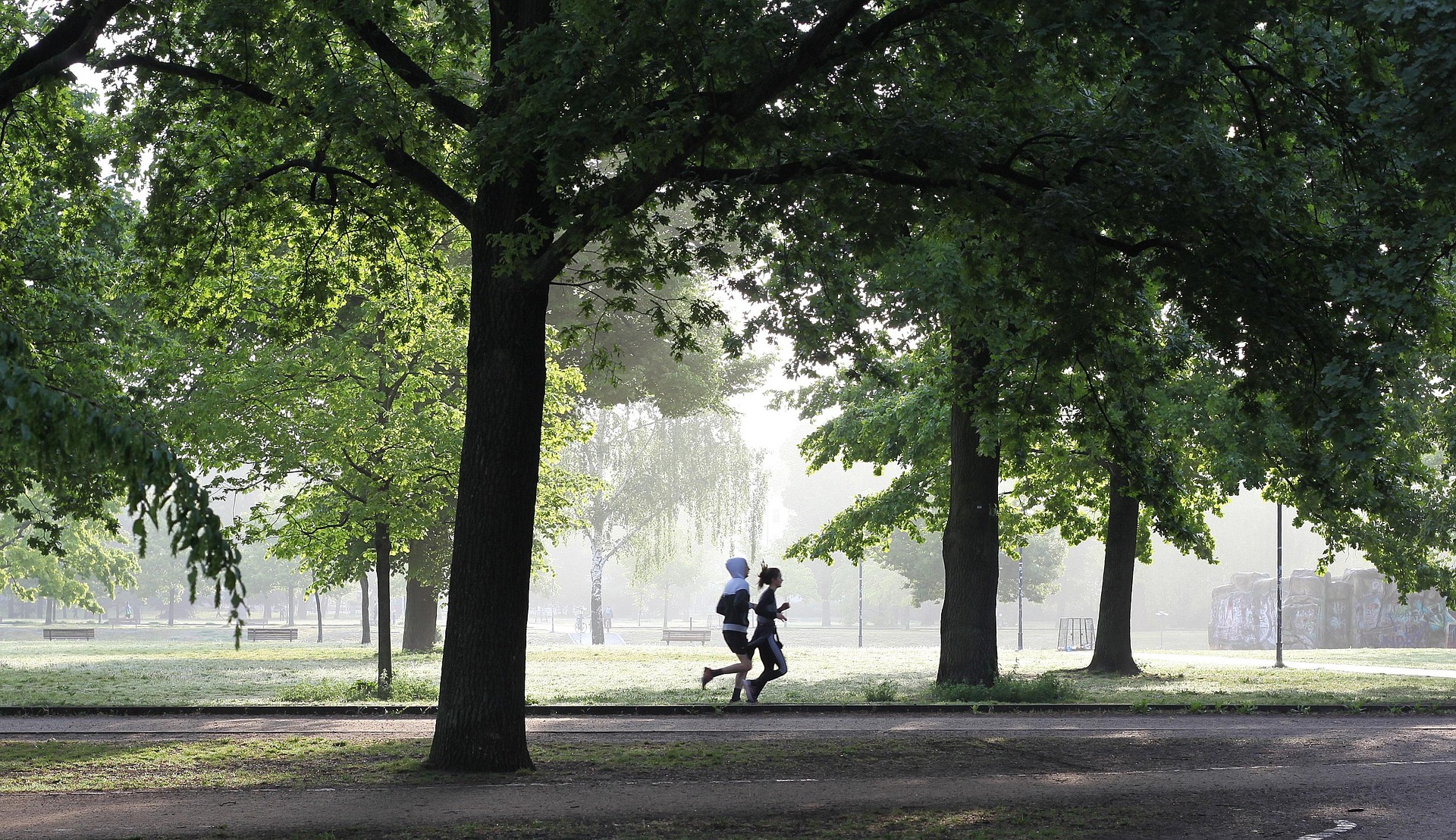
As we know, green infrastructure in urban areas provides an essential cooling effect to help cities reduce the heat island effect. And an abundance of green spaces can provide plenty of other benefits to citizens’ well-being as well.
So, what are Europe’s cities doing about getting – quite literally – greener?
In essence, the more verdant the city, the more livable and pleasant it can be for the vast majority of its inhabitants. As more cities provide a diversity of green spaces, those positive effects multiply exponentially across entire region.
The case for regreening
According to the European Commission (EC), every euro invested in restoring nature from the current poor status within the EU adds anywhere between €4 and €38 euros in benefits. Under the Nature Restoration Law that entered into force in August 2024, they recommend that European cities provide, at a minimum, 10% tree canopy cover for inhabitants. However, they note that aiming for 30% tree coverage in every neighborhood is preferable for more substantial improvements to microclimate, air quality, and health.
Cooling urban heat islands
Incorporating more green infrastructure in cities can certainly counteract urban heat. Vegetation not only absorbs much less heat than concrete and asphalt, but it also actively cools the air. Plants release moisture through evapotranspiration, which is why sitting under a tree can feel cooler than in the shade of a structure.
The US Environmental Protection Agency estimates that, because plants reflect sunlight and release moisture to cool the air, the surface temperature of a living roof, for example, can be around 15 to 20 degrees cooler (specifically, 30-40°F) than a traditional roof surface.
Concrete and other urban building materials also continue to release the heat they absorb long after the sun sets, effectively delaying relief from high daytime temperatures.
Other benefits
From helping to alleviate pollution to contributing to positive mental health, the additional benefits of regreening our cities are too important to ignore. Besides cooling the urban jungle, trees and plants also provide food, improve local biodiversity, and reduce flooding by absorbing rainwater that would otherwise run off the harder urban surfaces.
Some examples from Europe’s cities
As cities continue to grow and their climate-related challenges become more urgent, many have been sharing their plans and findings to stimulate and aid others in becoming more sustainable and livable.
These are some examples of European green infrastructure projects I came across during some recent research. Honestly, I find the diversity of approaches to regreening and restoration rather inspiring, offering real promise of climate resilience and livability.
Oslo, Norway
Oslo is the capital and largest city of Norway, with a population of over a million living in and around the city. The city is compact, surrounded by forest and the Oslo Fjord. Proudly committed to sustainability, Oslo was the first city in the world to create its own climate budget and it consistently follows a green city master plan. The EC named Oslo the 2019 European Green Capital for its sustainability efforts.
The surrounding forest and multiple city parks, including the immense Vigeland sculpture gardens, was not enough green for Oslo. The city has also created pollinator-friendly meadows of native flowering plants in multiple locations, including the Inger Munch Pier. Despite its highly unconventional harbor location, the Mother Meadow recreational area has become a haven for wild bees.
Izmir, Turkey
Located on Turkey’s Aegean coast, Izmir is part of the Southeast Europe region. An ancient city with over 4 million residents and one of the major port cities in the Mediterranean with rich wetlands, Izmir offers both cultural diversity and biodiversity.
As one of the three front-runner finalists of the EU-funded URBAN GreenUP project (2019-2023), the city’s newly designed Mavişehir Peynircioğlu Ecological Corridor serves as an inspiration in regreening solutions.
The corridor reunites the city’s residents with nature along both sides of the 800-meter Mavişehir Peynircioğlu creek extending inland from the bay. The project has created an urban belt of green that covers 41.000 square meters. Thousands of trees, shrubs, and carbon sequestrant plants were planted along 10 kilometers of permeable cycling and pedestrian paths to enrich the creek’s banks, resulting in roughly 50 tons of CO2 absorbed annually and summer temperature reductions averaging 3 to 5 degrees.
Lyon, France
With its reputation as the gastronomic capital of France and a place on the World Heritage List, this city founded by the Romans in the first century BC where the Saône and Rhône rivers converge has a rich cultural heritage. Lyon also boasts large city parks and riverbanks landscaped with greenery, as well as areas of unspoiled nature.
In 2024, Lyon achieved first place in the Green Cities Europe awards for its urban regeneration project at the Pré Gaudry gardens. Located on a former industrial site, the area has been transformed into a lush, peaceful, and cooling destination for inhabitants to enjoy nature in the city.
An important aspect of the project was using composting, biodynamics, and earthworm mulching to naturally enrich the previously compact and sterile soil. In this same vein, much attention has been given to ensuring multiple layers of planting that provide natural fertilizer and retain rainwater to minimize the cost of maintenance and protect the trees from dying. The garden has become an outdoor lab for exploring how cities can regenerate degraded soil into fertile substrates for urban greening.
Birmingham, England
Trees are a really big deal in this teeming metropolis in England’s West Midlands. With over a million inhabitants and about as many trees, Birmingham became a Tree City of the World in 2019 for its successful approach to managing urban forests.
The charity that became known as Birmingham TreePeople was established in 2016 to unite professionals in the arboriculture industry for the protection and promotion of the urban forest. Volunteers organize activities from tree planting, care, and surveying, to tree trails, identification walks, and other community engagement.
And because one million trees are not enough, the city has an Urban Forest Master Plan that provides an action-based strategy for how the urban forests will be managed and developed long-term. The current plan gives priority to increasing tree equity within the city by adding to the canopy cover in less green areas, to make sure they receive the same benefits of urban trees.
Ruhr Metro Area, Germany
The largest (and oldest) project on this list, the regional Emscher Landscape Park covers an enormous area of 450 square kilometers. It stretches over 85 kilometers from the river Rhine near Duisburg to the city of Bönen.
Over the past two decades, hundreds of projects have transformed this part of the Ruhr Metropolitan Area along the Emscher River from what was once a river of open sewage and a wasteland of coal mining and the steel industry into a parkland of diversified natural recreation and a network of green corridors. Many of the parks and gardens do pay tribute to their industrial past with exhibitions, art, and information centers, but the overall goal has been to restore the ecology of the area. Ecological improvements to the river and tributaries are set to continue with more room for meadows and biotopes. The regreening of this industrial region is a long-term work in progress. Plans to continue redesigning the rural and urban landscape aim to make the New Emscher Valley a true green backbone of the industrial Ruhr Metropolitan Area.
Website sources: Environment pages of the European Commission, Heat Island pages of the US Government EPA, Eurocities.eu, Oslo city government, URBAN GreenUP project, Green Cities Europe, Birmingham TreePeople, Emscher Landscape Park Visitor’s Guide
Leave a Reply